01
How to select an instrument
Match the tool to working distance, field of view, image, software and workflow.
Planned publication in 2027 · subject to formal announcement
Building inspection · leak investigation · image analysis
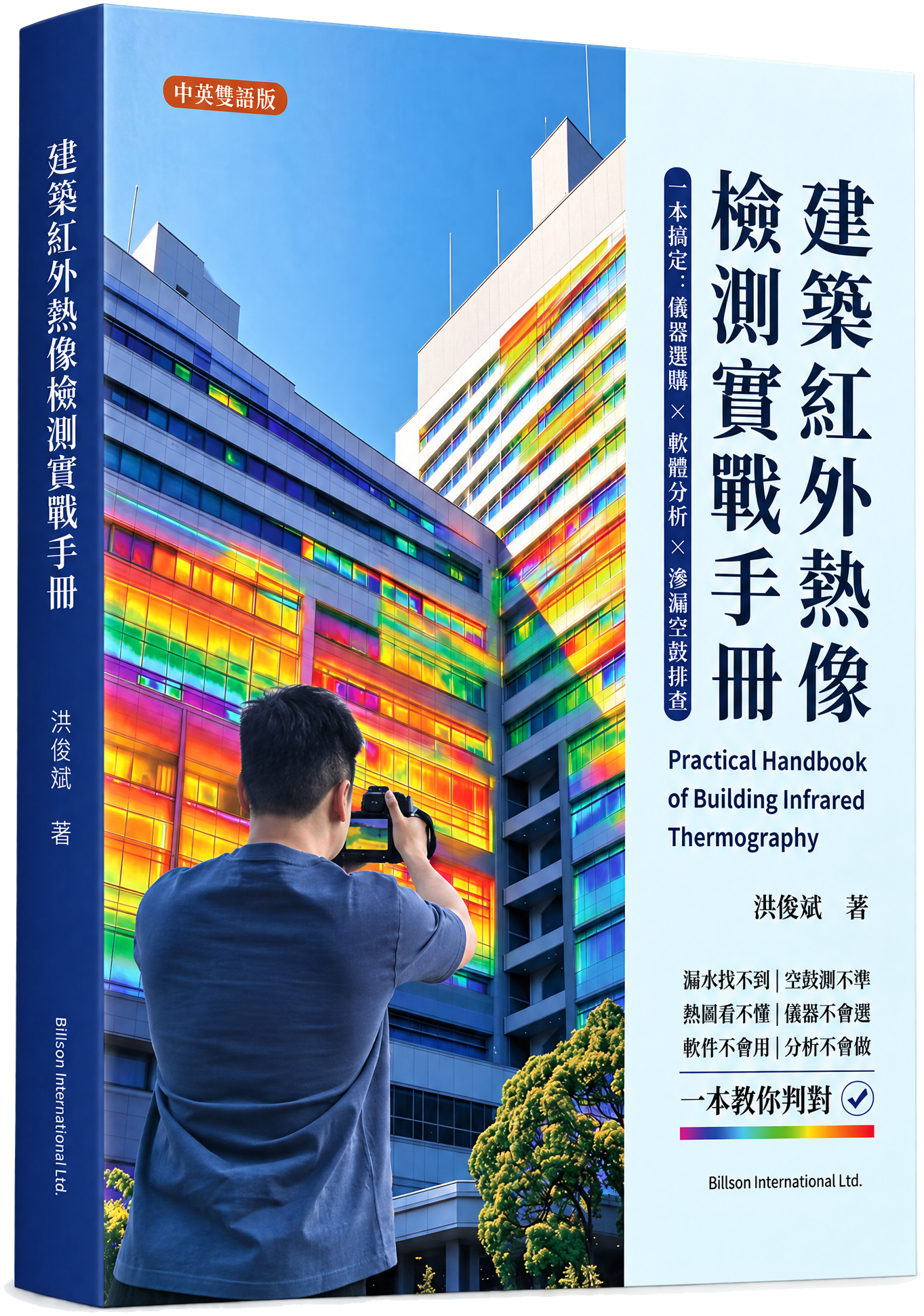
Learn infrared thermography — move inspection from experience-led guessing to visible, reviewable findings.
This is the handbook's permanent resource hub. Practical extracts, corporate training, small-group sessions and publication updates will be added here over time.

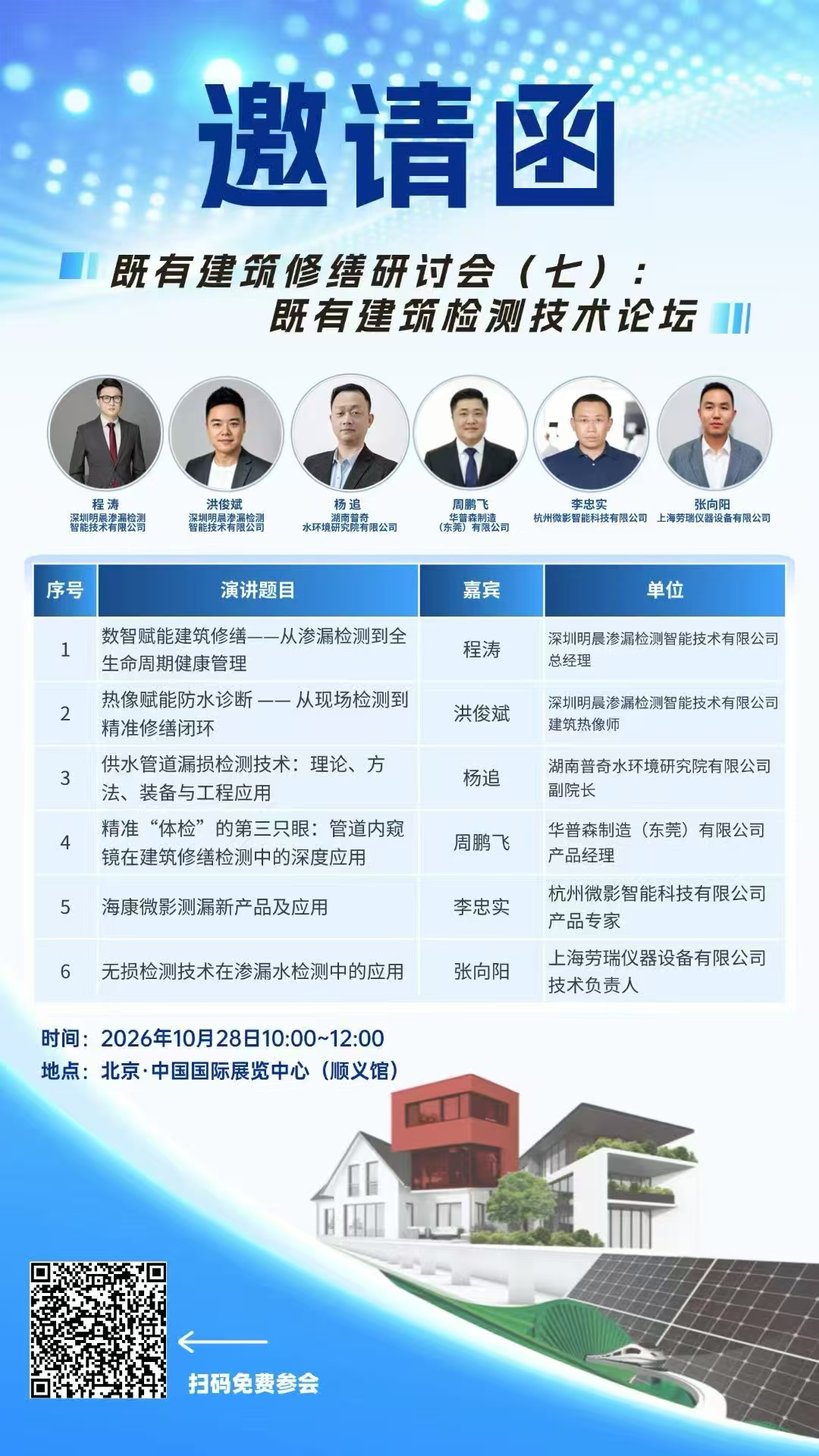
Existing Building Rehabilitation Seminar (VII)
Forum guest: Benny Hong | Building Thermographer, Shenzhen Mingchen Detection
A practical exchange with the Shenzhen Mingchen Detection team and visitors on how infrared thermography can support waterproofing diagnosis, field inspection and repair decisions.
China Waterproof Expo 2026 · Demonstrations & one-to-one discussion
Benny Hong will join the Shenzhen Mingchen Detection team at the booth for one-to-one discussion of field methods, thermogram capture, image post-processing and comparative analysis.
Bring a thermogram, an instrument or a site photograph for an initial technical discussion and basic demonstration. The handbook is planned for publication in 2027, subject to formal announcement.
HANDBOOK PREVIEW · PRACTICAL BUILDING-DIAGNOSIS EDUCATION
The handbook answers four practitioner questions: how to select equipment, capture on site, process and compare images, and use records in engineering reports. The point is a repeatable way of working, not memorizing specifications.
Match the tool to working distance, field of view, image, software and workflow.
Retain location, viewpoint, visible-light context and conditions for later review.
Use Level/Span, reference areas, ROI and matching viewpoints.
Organize interpretation, limits and supporting checks into technical material.
The handbook is planned for publication in 2027; publication timing, chapters and public-material versions remain subject to formal release.
BROAD · CLEAR · FAST · SOUND|PRACTICAL VALUE
Broad, clear, fast and sound are not performance or outcome guarantees. They describe how field thermography can become more complete, understandable, efficient and reviewable.
Keep location and relative thermal distribution across the field of view.
Match candidate anomalies with visible-light construction context.
Identify better directions for follow-up and reduce unguided opening-up.
Use comparable conditions, correct procedure and suitable verification.
The purpose is to guide follow-up inspection, repair and report communication—not to determine a cause, risk or legal conclusion from thermography alone.
A FIVE-MINUTE THERMOGRAM CHECK
Five minutes to read an image is not five minutes to reach a conclusion. It helps frame better site questions and suitable follow-up checks.
Colour is a display choice, not a conclusion; review palette, Level/Span and source material.
Relate the thermogram to frames, corners, joints, floors or construction details.
Observe linear, patch-like, bounded and continuous patterns.
Compare extent, form and change under similar positions and conditions.
Review solar load, material, moisture and timing; select suitable follow-up checks.
QUALITATIVE FIRST, QUANTITATIVE WITH CONTROL
Qualitative screening adds value for most routine sites. Remedial verification, disputes or scope accountability require controlled quantitative reinspection.
Retain thermograms, visible-light context, location, viewpoint and conditions.
Mark regions, standardize display and compare matching views.
Use construction checks, water testing or other suitable methods.
Organize revisit-able records for technical communication and reports.
Thermography supports screening, comparison and assisted interpretation. Cause, repair design, risk and responsibility conclusions require site context and suitable procedure.
These three cases show pipe-break review, a shower water-bar water-test verification, and comparable records for leakage disputes and arbitration-related technical material. Each retains a thermal/visible-light correspondence to illustrate the workflow: inspect first, analyse next; qualitative screening first, quantitative review only where justified.
CASE 01 · DRAINAGE PIPE LEAK TRACING
Water damage and finish deterioration appeared at a wall corner. Thermography first marked an anomalous thermal zone following the construction; visible-light context, pipe position and site construction then narrowed the suspected pipe-break position for focused review.
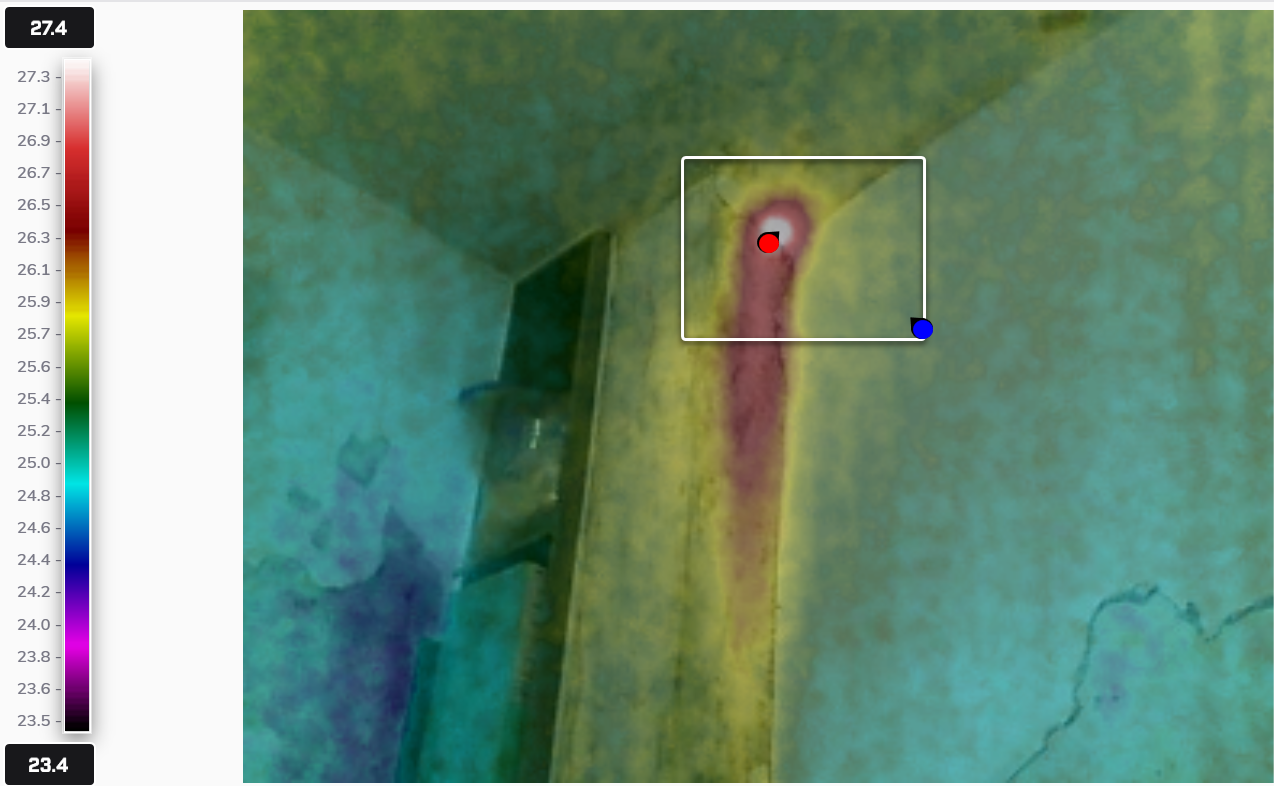
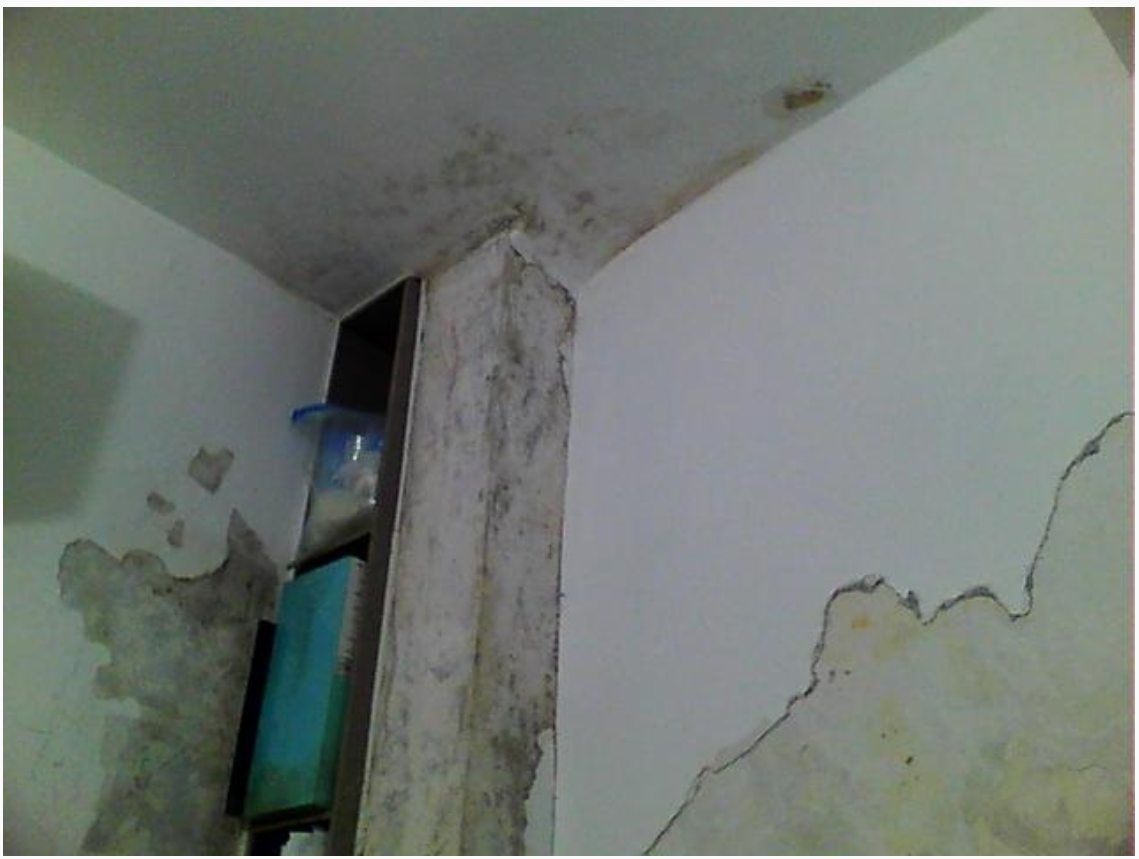
Working result: Thermography, visible-light context, pipe position and site confirmation were combined to identify the drainage-pipe break location. A single thermogram is not, by itself, a pipe-break conclusion.
CASE 02 · SHOWER WATER-BAR TEST
For a suspected failure at the dry/wet separation, a controlled water-use / shower condition created comparable test conditions. Thermal response near the water bar, tile base and door gap was then correlated to the visible construction and site position.
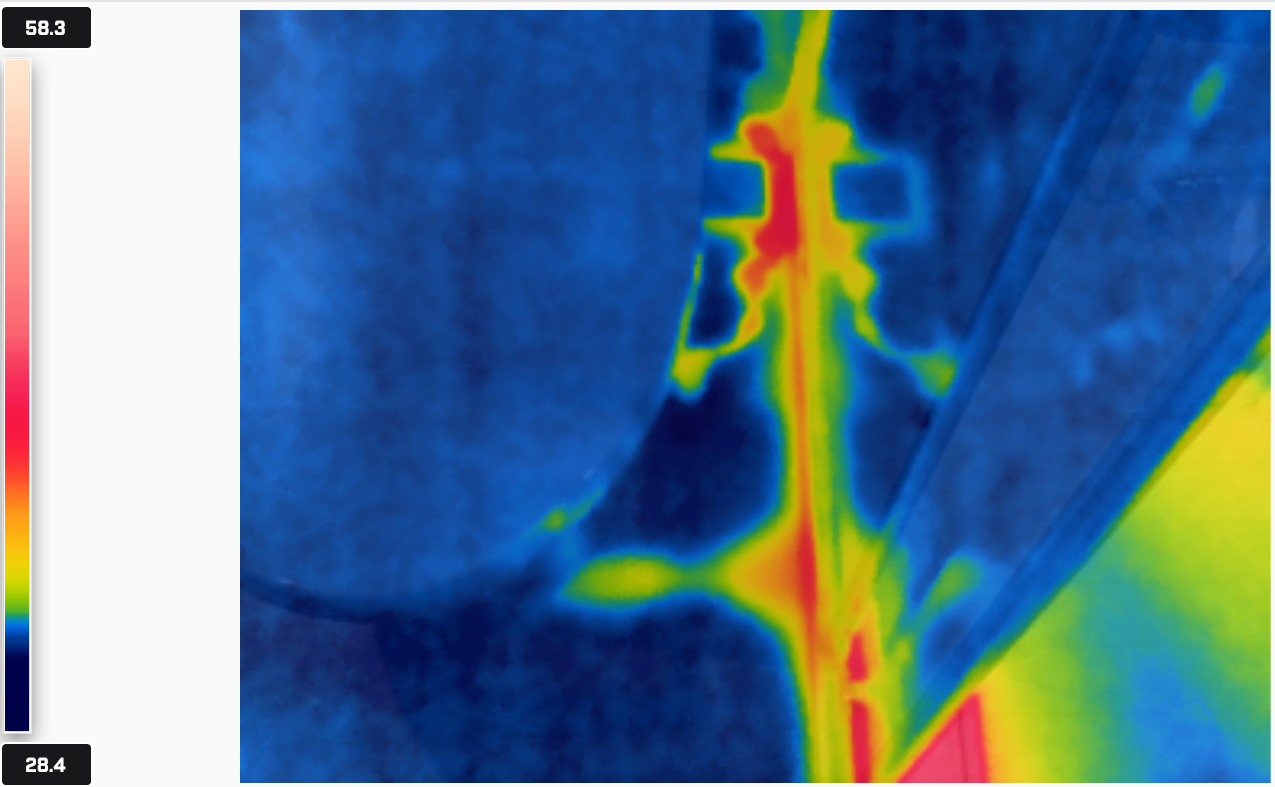
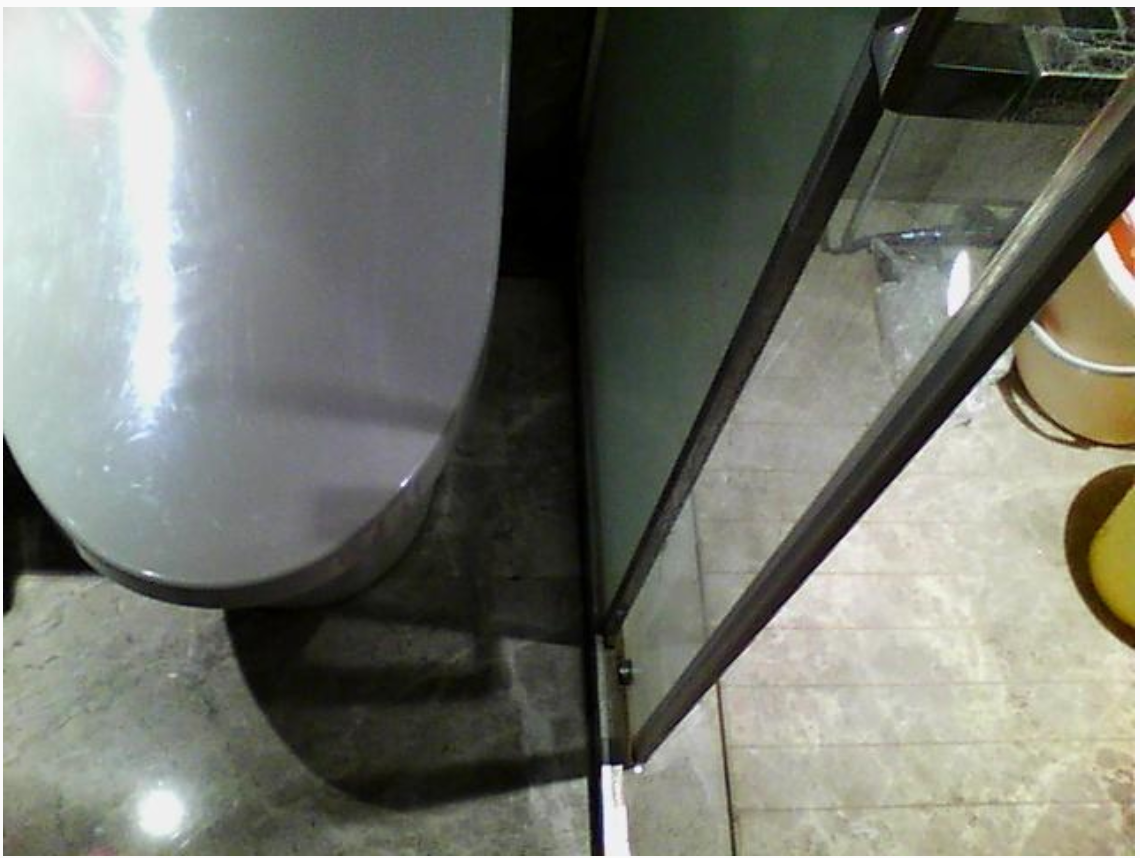
Verification logic: Control the water-use zone, viewpoint and timing. Thermography supplies a lead; site inspection and suitable testing remain necessary to confirm cause and repair scope.
CASE 03 · DISPUTE SUPPORT & ARBITRATION MATERIAL
For a dispute involving loss caused by upstairs water ingress, matching thermal and visible-light views retain site state, abnormal extent, construction context and time point. Together with conditions, ROI, Level/Span and suitable supporting verification, they form reviewable quantified technical records and meaningful supporting evidence.
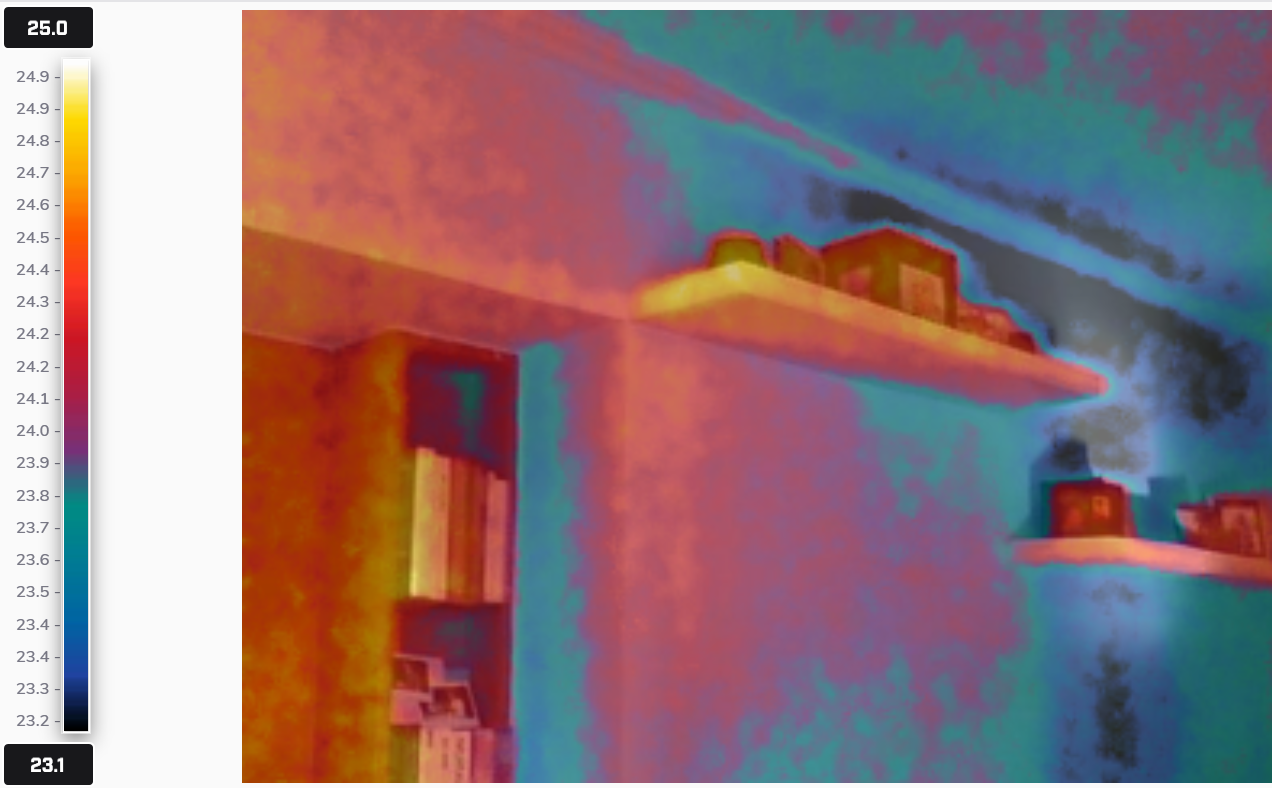
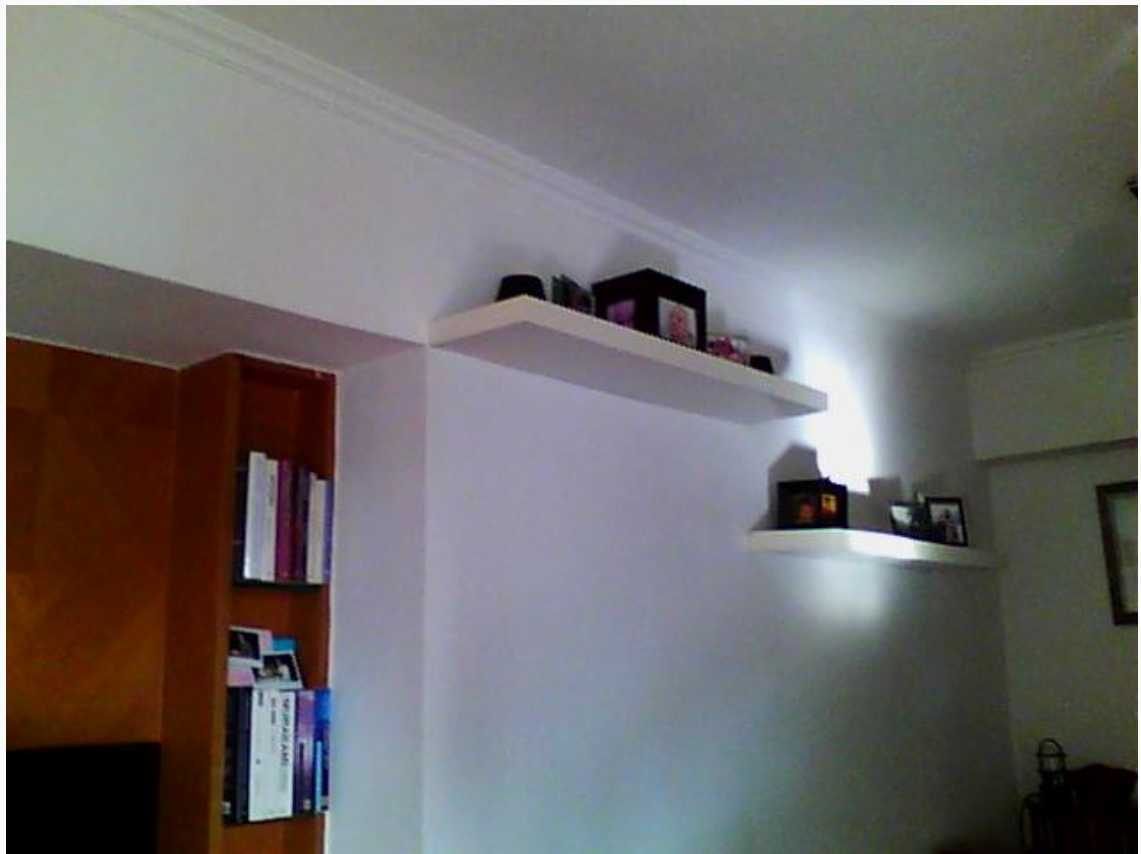
Scope of use: Such records can meaningfully support quantified documentation of loss caused by upstairs leakage, engineering communication and arbitration-material organization. Liability, forensic appraisal and formal loss assessment remain for the appropriate professionals under the required process.
CASE 04 · FACADE DELAMINATION SCREENING
A thermal sweep, visible-light comparison and picture-in-picture regions of interest rapidly identify geometric, sharply bounded thermal anomalies on the façade that warrant closer review. These are candidate areas for delamination or bonding defects, helping organize on-site confirmation and repair planning.
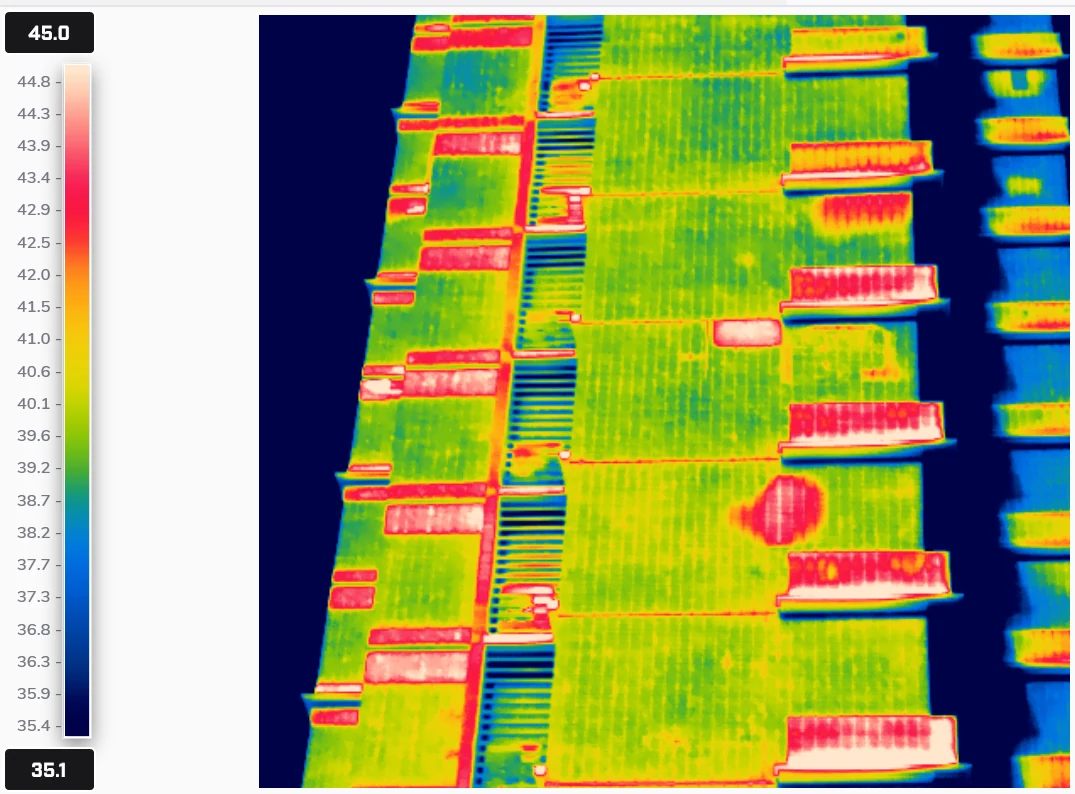
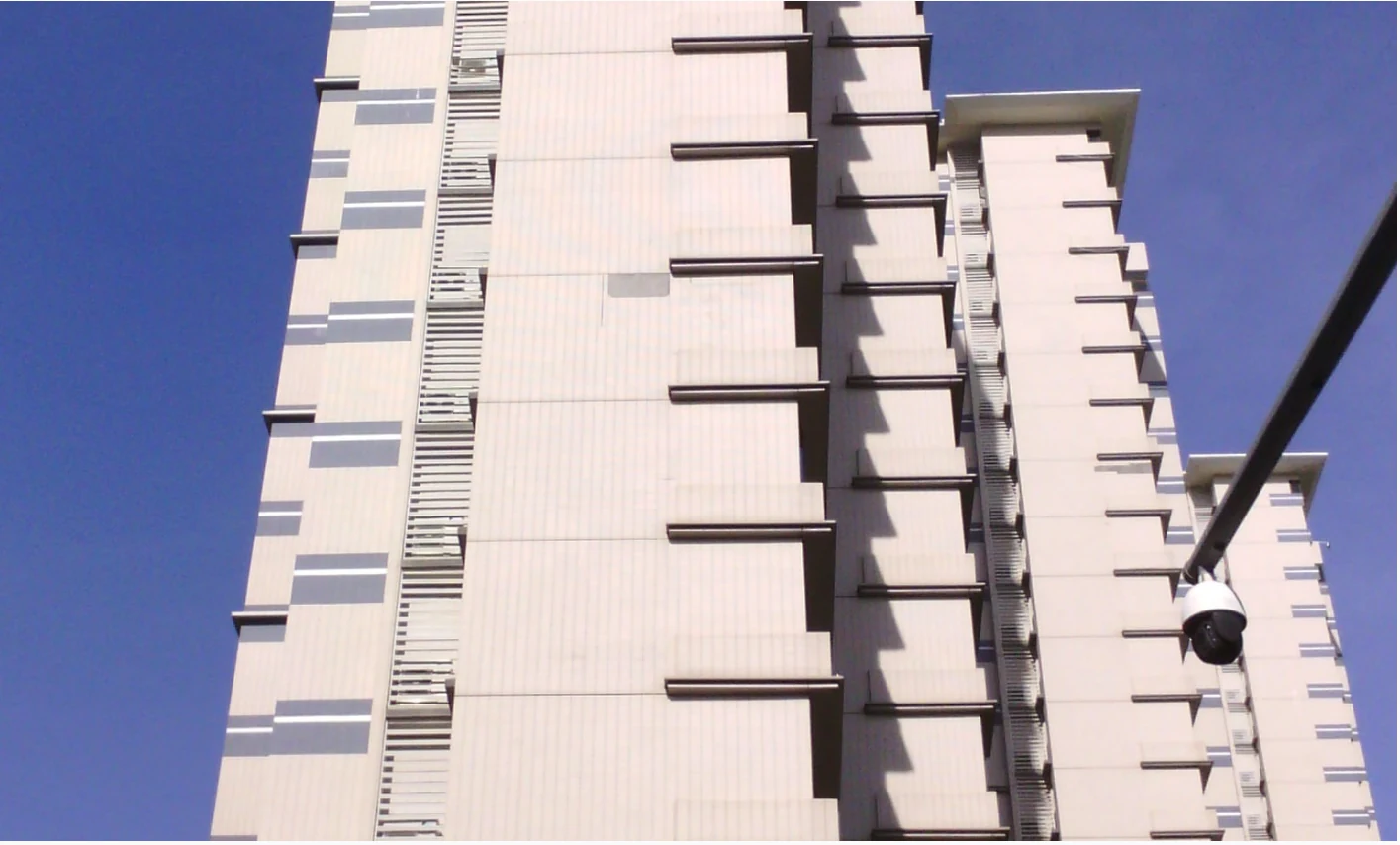
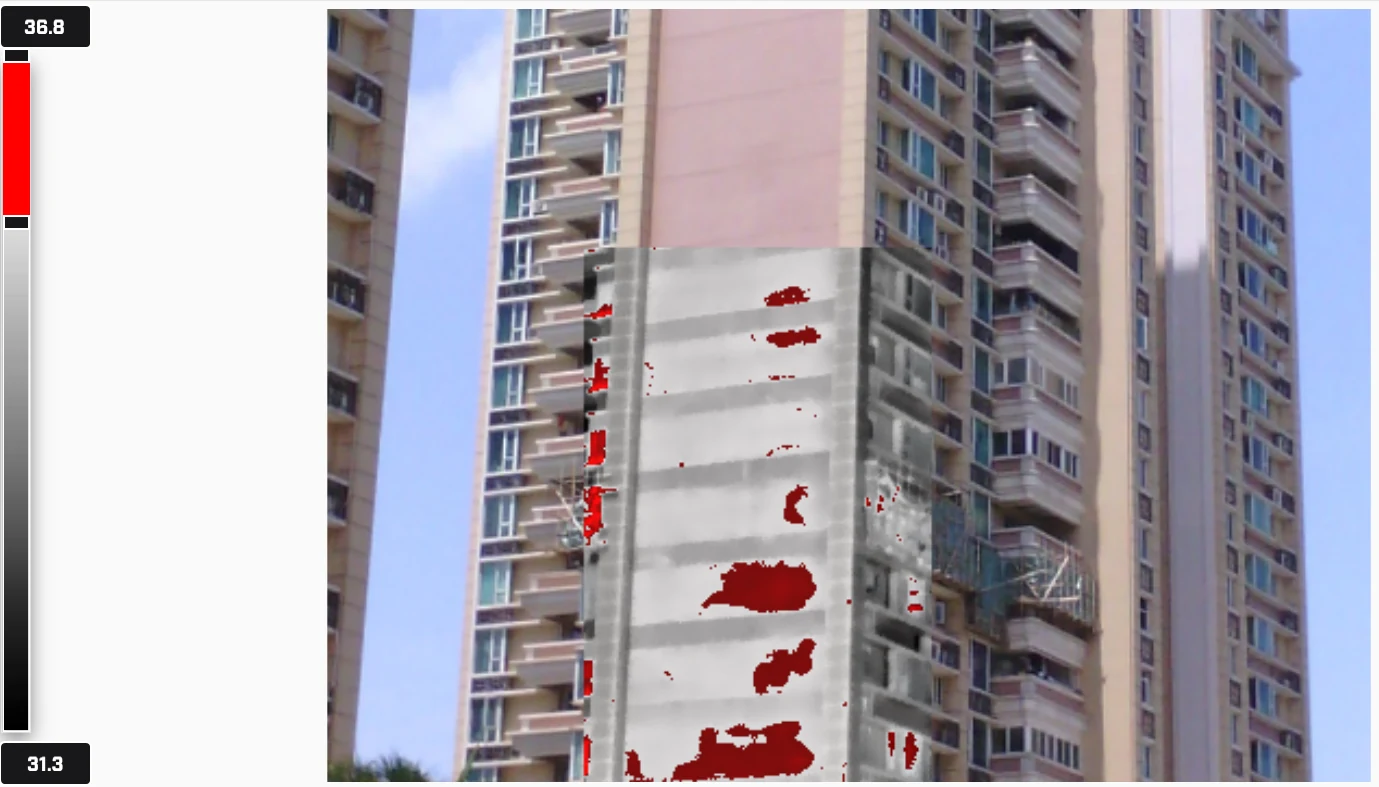
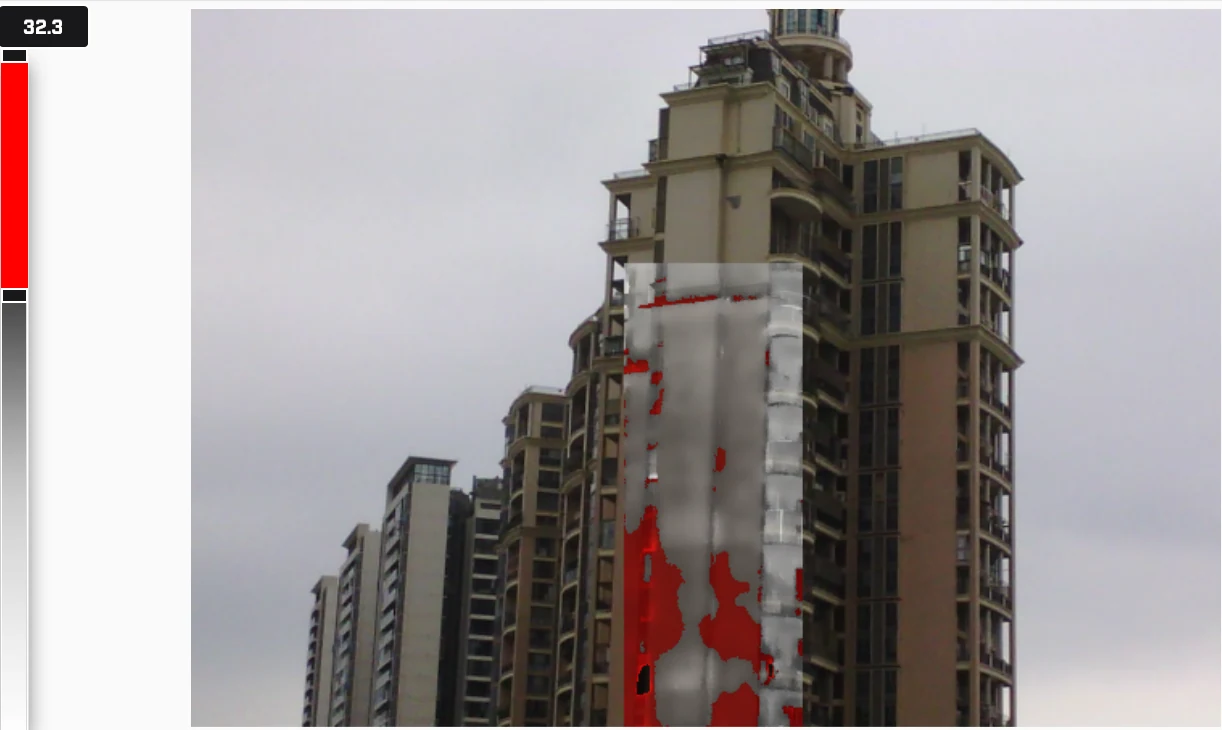
Safety note: Thermography is useful for rapid, non-contact initial screening; it does not alone confirm delamination or determine falling-facade risk. Suspect areas require tap testing for hollow sound, site inspection and suitable façade-safety assessment. Repair priority and safety measures must be decided by qualified professionals through the applicable site process.
PASSIVE INFRARED THERMOGRAPHY
Building surfaces form apparent infrared-radiation signals according to temperature and heat-transfer state. A thermal camera acts as a passive receiver, mapping surface-emitted and environment-reflected signals into a thermal distribution image. In thermal measurement mode, the camera does not actively transmit energy to the inspected surface for measurement.
Solar loading, heat flow, moisture, voids and material construction can change surface thermal patterns.
The detector receives apparent infrared signals; palettes show relative thermal distribution, while Level/Span mainly affects display and comparability.
Under comparable conditions, use reference areas, matching viewpoints, emissivity/reflection factors, construction context and suitable supporting methods to interpret findings.
Technical boundary: This is not through-wall vision or X-ray inspection. Thermograms primarily reflect surface thermal conditions and can be affected by emissivity, reflected apparent temperature, wind, solar load, materials and surface state.
Professional boundary: A thermal anomaly alone is not a leak conclusion, a direct moisture-content reading or a legal conclusion. Reflections, environmental temperature differences, material construction and surface conditions can affect thermograms; site conditions and suitable supporting methods must be considered together.
THERMOGRAPHY PRACTICE VALUE
This is not a one-image shortcut. It is a repeatable workflow that connects site observation, image post-processing, comparison and supporting verification.
Make hard-to-describe locations, boundaries and changes more visible, giving field inspection a clearer direction.
Record site conditions, reference areas, Level/Span, temperature bands, abnormal extent and form trends together to create technical material that can be revisited and explained, rather than relying on subjective colour reading.
Organize matching pre-/post-remedial captures, site conditions and supporting checks into technical-report material for discussing effect and next verification steps.
It can serve as a supplementary technical capability for waterproofing, inspection and repair teams; it does not guarantee a tender award or project outcome.
Instrument selection, field capture, image post-processing and result-interpretation tools.
Coming soonRepeatable thermography inspection workflows for engineering, waterproofing, property and inspection teams.
Coming soonHands-on learning that brings the handbook's select, capture, process and judge method to site.
Coming soonProgress, launch information and future arrangements for the bilingual international edition.
Coming soonProject Collaboration / Technical Support
Waterproofing leaks, repair decisions, field inspection workflows, thermogram analysis and technical support for teams.
Suitability and inspection approach require an initial assessment of actual site conditions; thermography alone is not presented as a decision for every leak condition.
Project information intake in preparationCONTACT INQUIRY
📌 Domestic consultation, training registration & project discussion
WhatsApp is for cross-border clients only. WeChat is recommended for users in mainland China. 📍 Exhibition Info | China Waterproof Expo Oct 28–30 | Booth E4-1008 Welcome to discuss your thermography cases & technical questions on site.

Handbook extracts, training information, project collaboration and technical-support updates will continue here.
LEGAL & USE NOTICE
This page is provided for technical exchange, education and exhibition information only. Site conditions, construction, camera settings and supporting verification differ from project to project. Its text and images must not replace site investigation, an engineering inspection report, forensic appraisal, legal advice, façade-safety assessment, repair design or any guarantee of outcome. All content on this website shall not constitute any contract or inspection entrustment. Formal project service requires a separate written agreement.
Case images illustrate inspection reasoning only. Public versions are controlled for presentation and must not be cited separately from their site conditions, limitations and supporting verification.
Delamination, falling-facade, leakage and repair risks require verification by qualified professionals through the applicable site process. Urgent risks require priority site-safety measures.
When sharing site photographs, thermograms or contact details, do not include unnecessary personal or sensitive project information. Remote discussion is not a commissioned inspection service.
Except for third-party material separately identified in writing, the text, course framework, case-image arrangement and technical presentation on this page are copyrighted by the author, Benny Hong. Without written permission, they may not be copied, republished from screenshots, resold, used for training or promotion, stripped of attribution or adapted.
Case-display images carry a low-interference watermark for web viewing and technical exchange only. Original thermograms, camera settings, complete reports and high-resolution files should be retained as unwatermarked masters, managed with file records, permissions and version numbers.